- Osteoarthritis stiffness often eases within 30 minutes
- Rheumatoid arthritis stiffness may linger for hours
Tip: Stiffness that improves with movement is a red flag for arthritis, especially when combined with other symptoms.
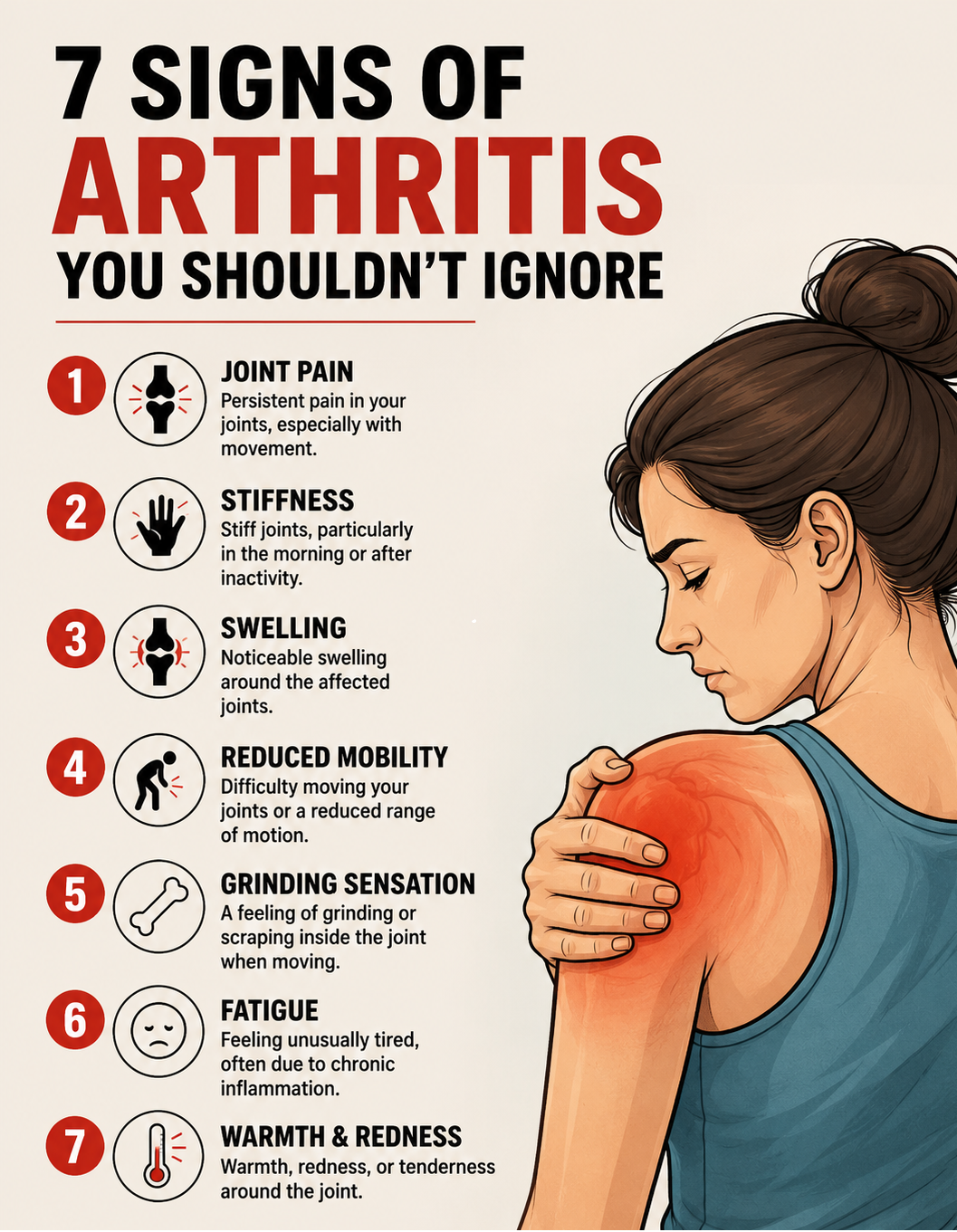
4. Grinding or Cracking Sounds (Crepitus)
If your joints make a grinding, clicking, or cracking sound when moving, it could signal wear and tear in the cartilage.
This is especially common in osteoarthritis, where cartilage breakdown causes bone surfaces to rub together.
When to see a doctor: If sounds are accompanied by pain or loss of movement, it’s worth discussing with a specialist.
5. Reduced Range of Motion
A restricted ability to fully bend, straighten, or rotate a joint could mean:
- Joint inflammation
- Stiffness from cartilage damage
- Muscle tightness or structural changes
When to act: Noticeable limitations in how far a joint moves—or pain when trying—should be professionally assessed.
6. Referred (Deferred) Pain
Pain from arthritis may not always occur at the site of the affected joint. For example:
- Hip arthritis may cause groin, thigh, or knee pain
- Foot arthritis may cause back or hip discomfort
- Lower back arthritis can radiate pain to the legs or knees
Why it matters: Misdiagnosed referred pain may delay arthritis treatment. Talk to your doctor about pain that feels “off” or migrates.
7. Fatigue
Feeling constantly tired—even with adequate rest—could be due to:
- Chronic inflammation taxing your immune system
- Pain interfering with sleep quality
- Reduced activity or mental strain
Fatigue is especially common in autoimmune forms of arthritis like RA or lupus.
What to monitor: If you’re exhausted despite resting well, and it’s affecting your focus or daily tasks, it’s time to investigate.