—Did the great-grandmother change her mind? He asked quietly.
I didn’t scream. I didn’t cry. I felt something inside me tense until it hurt.
“Your father took care of it”
I went to the kitchen. My mother, Marta, was there, coffee in hand. My father, Roberto, was checking his tablet. My sister Carla drank something green and expensive.
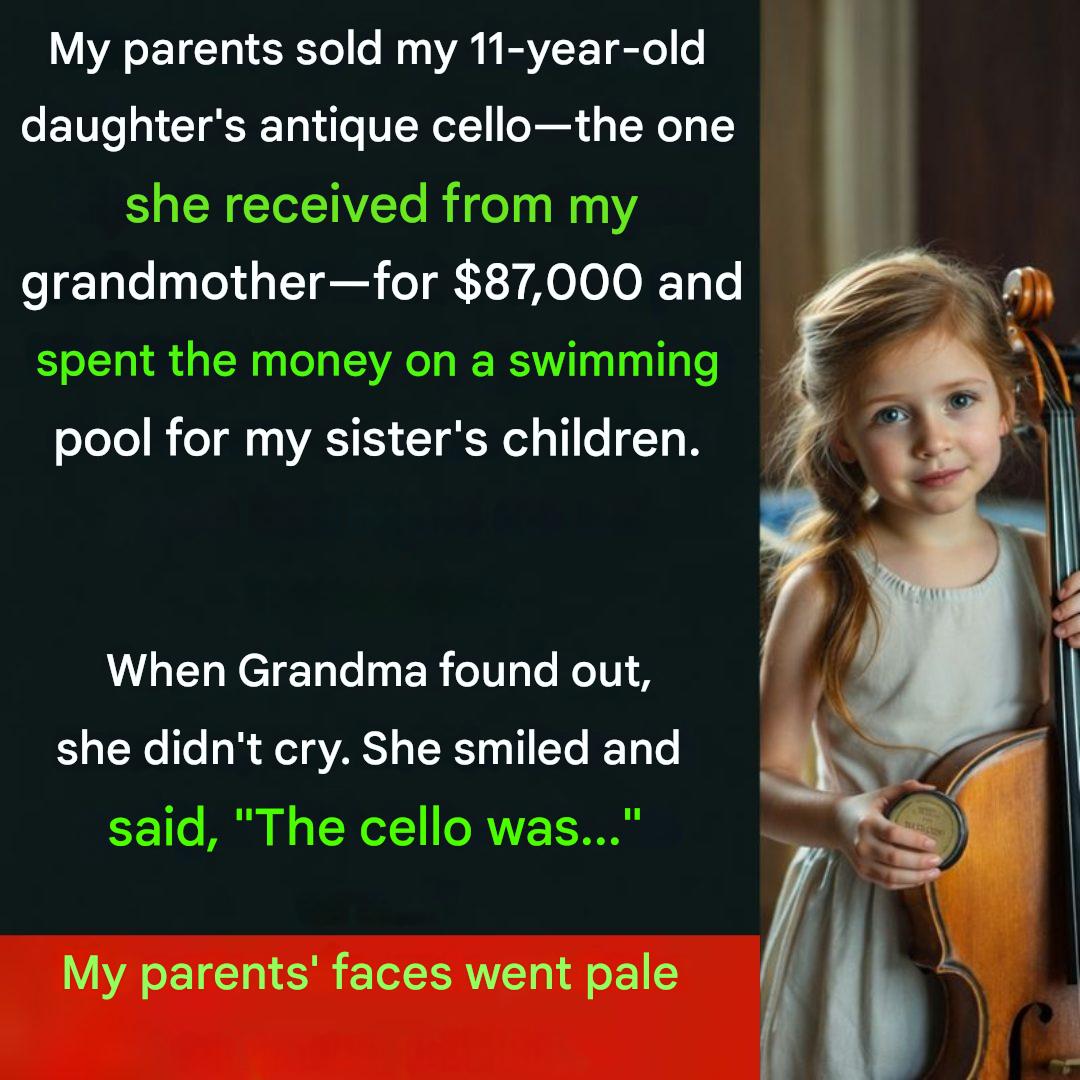
“Where is Lucia’s cello?” I asked.
“Your father took care of it,” my mother said, as if talking about a bill.
“Did you order how?”
“We sold it,” my father replied. It was valuable. It was there unused.
“It wasn’t his,” I said. It was my daughter’s
“He’s eleven years old,” Carla sneered. You can use a student one.
That’s when I understood everything.
“Lucía is going to be fine”
That phrase. Always the same.
“Lucia is going to be fine.”
It’s the elegant way of saying: we did what we wanted and we’re not going to take responsibility.
When I asked who had bought it, my father said a collector. Fast payment. Transfer.
And then came the order:
“Don’t say anything to your grandmother.
Not “so as not to worry her.”
Otherwise: don’t tell him the truth.
A girl who learns to take up less space
That night, Lucia practiced with a borrowed cello. The sound was poor, opaque.
“I can keep practicing,” he said. It’s just harder.
Then he added something that broke me inside:
“Maybe great-grandmother still didn’t want it to be mine.
Lucia had learned to make herself small. Do not disturb. To accept less.
And that had not begun that day.