Top 3 Ways to Treat Tooth Decay with Guava Leaves – Simple and Cost-Effective

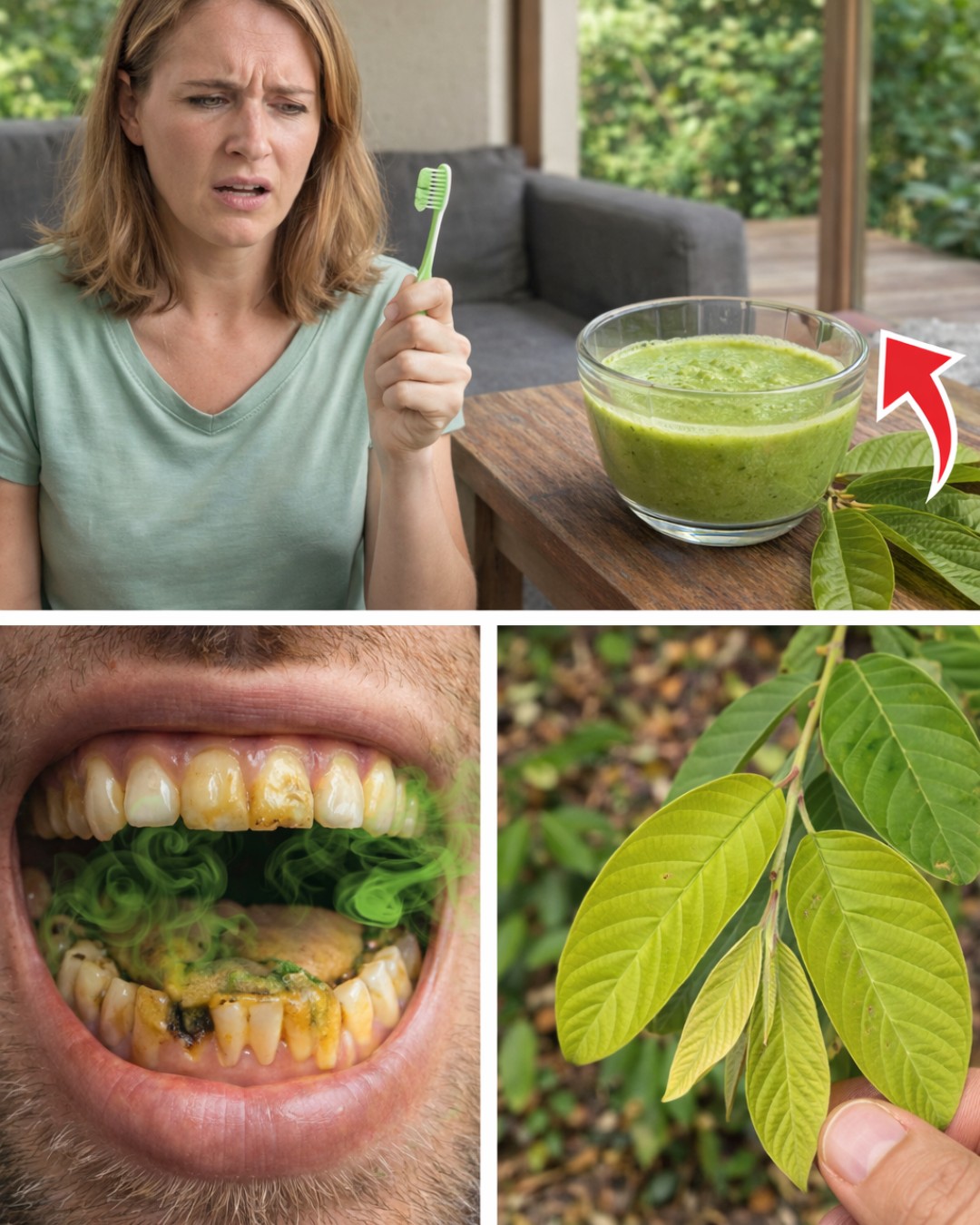
Method 2: The Guava Leaf Mouth Rinse (For Daily Freshness)
If the idea of chewing on raw leaves doesn’t appeal to you, don’t worry. This method is much gentler and fits perfectly into a modern bathroom routine.
It serves as an excellent alternative to alcohol-based mouthwashes, which can sometimes dry out the mouth and cause irritation.
How to Prepare Your Rinse:
- Ingredients: Take 5–7 fresh guava leaves and 1 cup of water.
- Boil: Place the leaves in the water and bring to a boil. Let it simmer for 10–12 minutes until the water turns a brownish-tea color.
- Cool: Strain the leaves and let the liquid cool down until it is lukewarm.
- Action: Swish the liquid vigorously in your mouth for 30–60 seconds.
- Discard: Spit it out. Do not swallow.
The “Freshness” Factor
Unlike commercial rinses that often sting, this herbal rinse provides a soothing effect. It is particularly helpful if you have minor gum irritation or if you simply want to neutralize “morning breath” naturally.
Pro Tip: You can store this solution in a clean jar in the refrigerator for up to 3 days. Just make sure to shake it well before using.
Method 3: Guava Leaf and Salt Paste (Targeted Care)
Sometimes, you need more than a rinse. You need something that stays in place to work on a specific area.
This paste combines the antibacterial potential of guava with the cleansing properties of salt.
Preparation Guide:
- Crush: Take 4–5 clean leaves and crush them into a paste. You can use a mortar and pestle or a blender with a tiny bit of water.
- Mix: Add a small pinch of high-quality salt (sea salt or rock salt is best).
- Apply: Use a clean finger or a soft-bristled toothbrush to apply the paste to your teeth or gums.
- Wait: Let it sit for about 5 minutes.
- Rinse: Wash your mouth out thoroughly.
Why add salt?
Salt is a natural abrasive and cleanser. It helps remove surface stains and draws out fluid from inflamed tissues, which can provide a feeling of relief for puffy gums.
Frequency: Limit this method to 1–2 times per week. Over-scrubbing with salt can be abrasive on enamel if done daily.