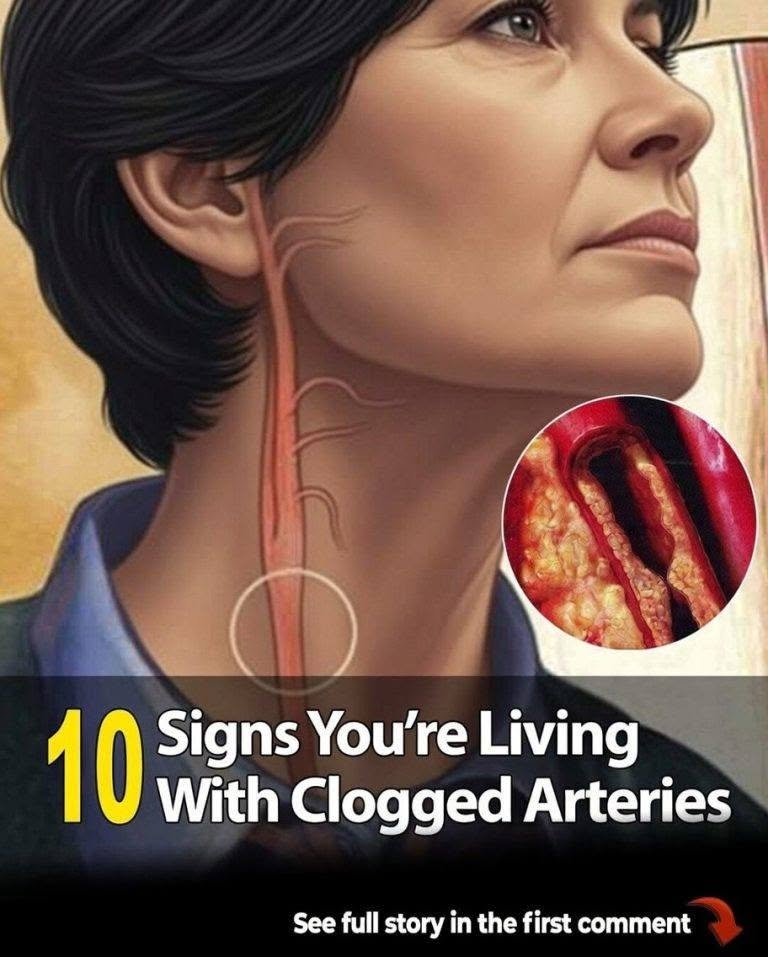
Clogged arteries, medically known as atherosclerosis, develop when fatty deposits called plaque accumulate inside the blood vessels. Over time, these deposits narrow the arteries and reduce blood flow to vital organs and tissues.
One of the biggest dangers is that artery blockage often develops silently. Many people have no symptoms for years or even decades before a serious event such as a heart attack or stroke occurs.
Fortunately, the body sometimes sends warning signals before a major cardiovascular emergency happens. Learning to recognize these signs can help you seek medical evaluation sooner and potentially prevent serious complications.
Here are ten symptoms that may indicate reduced blood flow caused by clogged arteries.
1. Chest Pain or Pressure (Angina)
Chest discomfort is one of the most recognized warning signs of coronary artery disease.
People often describe it as pressure, squeezing, tightness, heaviness, burning, or discomfort in the center or left side of the chest.
The sensation may appear during physical activity, emotional stress, climbing stairs, or other situations that increase the heart’s workload.
When coronary arteries become narrowed, the heart muscle may not receive enough oxygen-rich blood during periods of increased demand.
Some individuals also experience pain that spreads into the:
• Left arm
• Both arms
• Neck
• Jaw
• Back
• Shoulder
Chest pain that is new, severe, worsening, or accompanied by sweating, nausea, shortness of breath, or dizziness requires immediate medical attention.
2. Shortness of Breath
Breathlessness can be another important warning sign.
You may notice that activities once considered easy suddenly leave you feeling winded. Some people become short of breath while walking short distances, climbing stairs, or even resting.
Reduced blood flow can impair the heart’s pumping ability, limiting oxygen delivery throughout the body.
In some cases, fluid may accumulate in the lungs, making breathing more difficult.
Persistent or worsening shortness of breath should never be ignored.
3. Unusual Fatigue
Feeling tired occasionally is normal. However, persistent exhaustion without a clear explanation may signal a cardiovascular problem.
When arteries are narrowed, the body receives less oxygen and nutrients. The heart must work harder to maintain circulation, often leading to fatigue.
This symptom can be especially important in women, who may experience unusual tiredness as an early sign of heart disease or even a heart attack.
If fatigue suddenly becomes severe or interferes with daily activities, it deserves medical evaluation.
But the warning signs are not always limited to the chest or energy levels. In many cases, circulation problems begin showing up in other areas of the body first.