4. How Salt Enhances the Mixture
Salt can contribute to dehydration by affecting a plant’s ability to absorb water.
When combined with vinegar, it may increase the visible damage to weeds.
However, salt should be used carefully.
Excessive amounts can remain in the soil and may affect future plant growth. For this reason, many gardeners reserve salt-based treatments for areas such as driveways, patios, gravel paths, and sidewalk cracks rather than garden beds.
5. The Role of Dish Soap
Dish soap helps reduce the surface tension of the liquid mixture.
This allows the solution to coat weed leaves more effectively instead of beading up and running off.
Improved coverage can increase the contact between the vinegar solution and the plant surface.
6. Step-by-Step Guide to Making the Mixture
Gather the following:
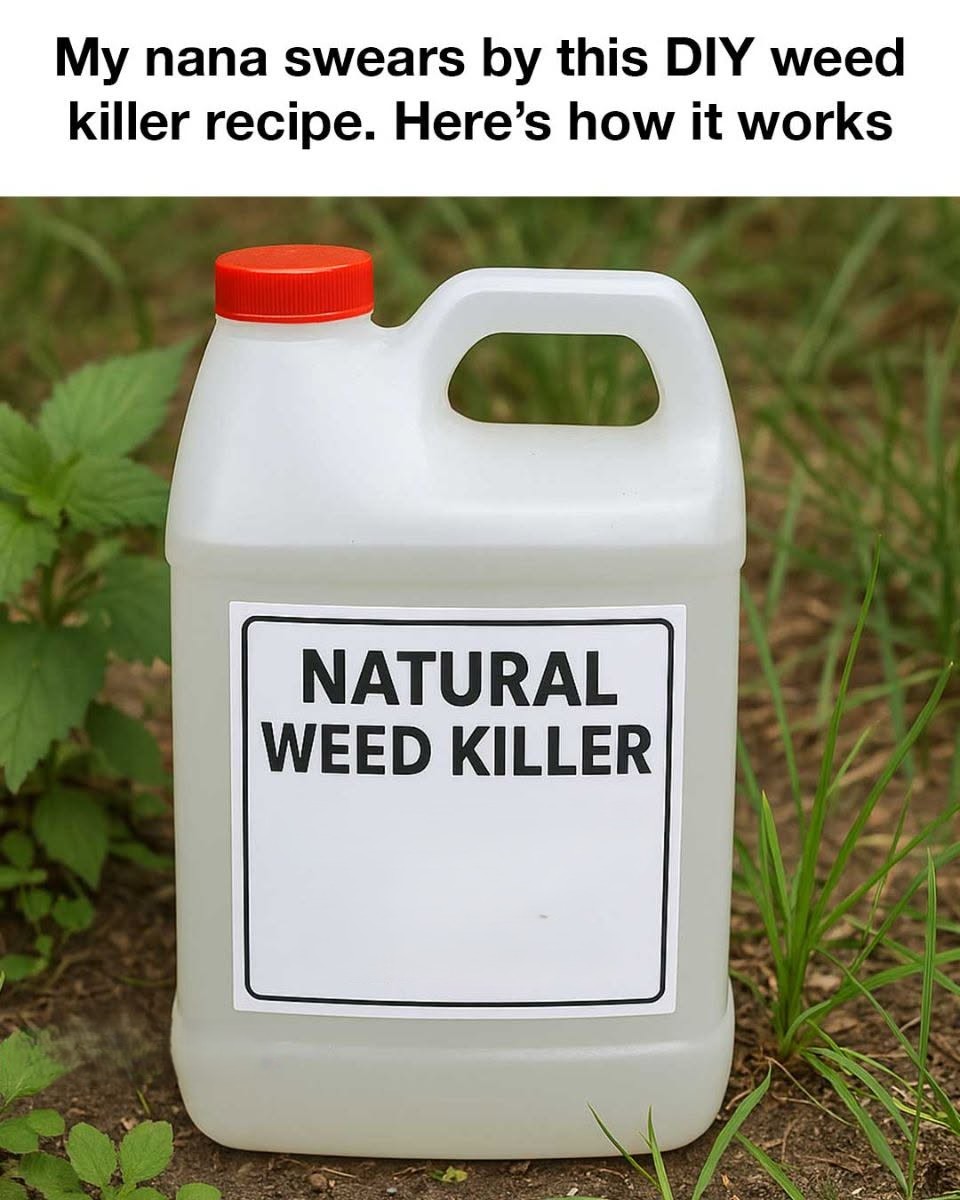
1 gallon of white vinegar
1 cup of table salt
1 tablespoon of liquid dish soap
A spray bottle or garden sprayer
Pour the vinegar into a large container.
Add the salt and stir until it dissolves as much as possible.
Add the dish soap and gently mix.
Transfer the solution to a spray bottle or sprayer.
The mixture is then ready for use.
7. Applying the DIY Weed Killer Effectively
Apply the solution directly to the leaves of unwanted weeds.
Choose a dry day with little wind to reduce drift onto nearby plants.
Because the mixture is non-selective, it can damage flowers, vegetables, grass, and ornamental plants if it comes into contact with them.
Careful spot treatment is often the safest approach.
Before using this mixture widely around your property, there are several important safety and environmental considerations worth understanding.